
Many patients hear the terms plaque and tartar during dental visits but may not be completely sure what they mean. Both relate to buildup that forms on the teeth over time and can affect oral health if not properly managed. Understanding the difference between plaque and tartar can help patients take better care of their teeth at home and understand why regular dental visits are important for maintaining a healthy smile.
What Is Plaque?
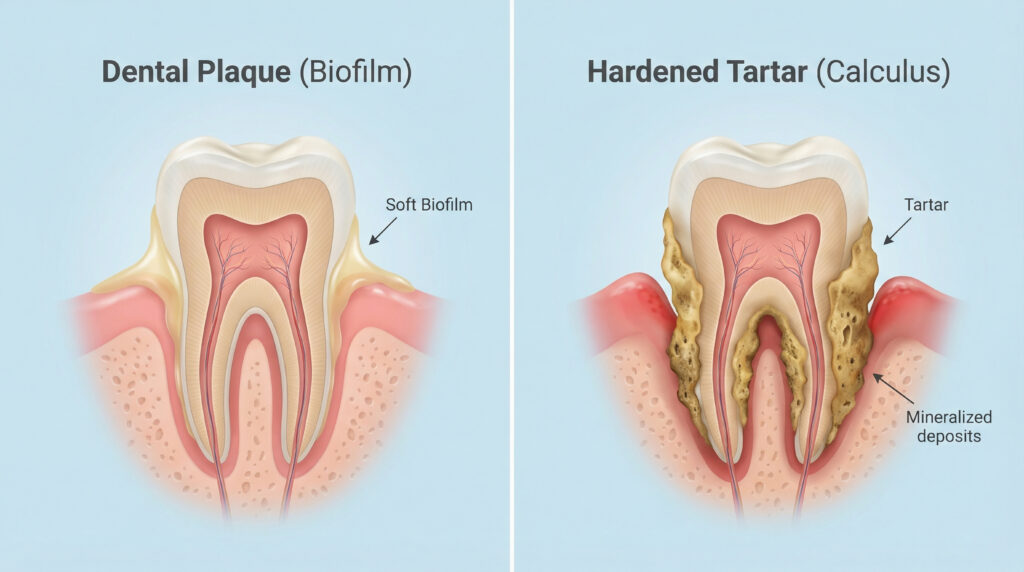
Plaque is a soft, sticky film of bacteria that forms on teeth throughout the day. It develops when bacteria in the mouth mix with food particles and sugars left behind after eating. Plaque can build up along the gumline, between teeth, and on the surfaces of teeth.
If plaque is not removed regularly through brushing and flossing, it can begin to cause problems for both teeth and gums. Over time, plaque buildup may contribute to tooth decay, gum irritation, and bad breath.
Because plaque is soft, it can usually be removed with consistent daily oral hygiene. Brushing twice a day and flossing between teeth helps prevent plaque from accumulating and reduces the chance of it turning into something more difficult to remove.
What Is Tartar?
Tartar is what happens when plaque is left on the teeth for too long. Over time, plaque can harden and turn into a mineralized deposit that attaches firmly to the tooth surface. Once plaque becomes tartar, it cannot be removed through brushing or flossing alone.
Tartar often forms along the gumline or in areas that are harder to clean thoroughly at home. It may appear as a yellow or brown buildup on the teeth and can create a rough surface that allows more plaque and bacteria to collect.
Because tartar is hardened, it usually requires a professional dental cleaning to remove it safely.
Why Professional Dental Cleanings Matter
Daily brushing and flossing are essential for keeping plaque under control, but even with good oral hygiene, some areas of the mouth can be difficult to clean completely. Over time, small amounts of plaque may harden and form tartar in these hard to reach spots.
Professional dental cleanings allow dental teams to remove tartar buildup and help keep gums healthy. Regular visits also give dentists the opportunity to check for early signs of dental concerns and recommend appropriate care before problems develop further.
Supporting Healthy Teeth and Gums
Understanding the difference between plaque and tartar is an important part of maintaining good oral health. Brushing, flossing, and attending regular dental appointments all play a role in preventing buildup and protecting your teeth and gums.
If you have questions about plaque, tartar, or professional dental cleanings, the team at Bloor Smile Dental can help guide you toward healthy habits that support long term oral health. Scheduling regular visits is one of the best ways to keep your smile in good shape. Contact us today!